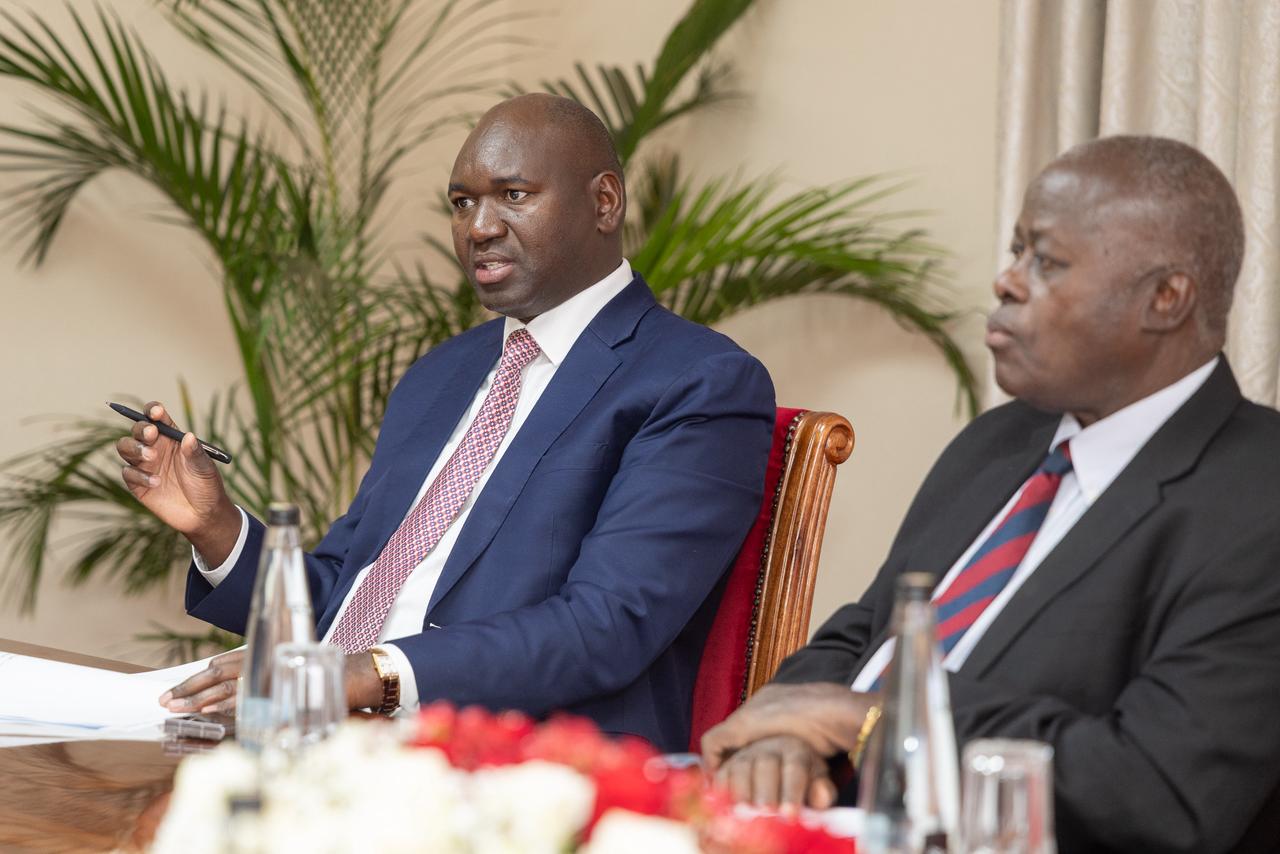
Education Principal Secretary Julius Bitok has assured that all outstanding payments for teachers and examination personnel involved in the 2025 Kenya Certificate of Secondary Education (KCSE) will be settled promptly.
The ministry is working closely with the National Treasury to clear dues for examiners, coordinators, and other staff, reaffirming the government’s commitment to improving the welfare of all examination stakeholders.
“We are working very closely with Treasury, and their dues will be paid as soon as possible,” Bitok said on Friday, emphasizing the government’s strong commitment to ensuring timely remuneration for everyone involved in the 2025 examinations.
His statement comes amid ongoing concerns from examiners and administrative staff over payment delays in previous years.
Bitok attributed the smooth conduct of the 2025 KCSE to a coordinated “whole-of-government” approach, which brought together multiple ministries and agencies.
“We have had teams from the Ministry of Education, our field officers, the Ministry of Interior including NGAO, the DCI, and the entire security apparatus of this country. We have also worked with the Ministry of ICT, the Communication Authority, and other stakeholders,” he said, noting that this collaboration ensured a secure, fair, and transparent examination process.
The 2025 KCSE marks the final cohort under the 8-4-4 system, a milestone as Kenya transitions fully to a competency-based education (CBE) model. Bitok highlighted the scale of this transition, revealing that 1.1 million learners moved from junior to senior school this year.
These students were supported with multiple revision opportunities, including first and second chances to refine their academic pathways, a move the PS described as unprecedented in the education system.
“The system is very transparent. We are using an open and digital approach to ensure every learner has access to schools of their choice, depending on available capacity,” Bitok added, underscoring the government’s focus on equity and accessibility during this period of reform.
A central feature of these reforms is the Kenya Education Management Information System (KEMIS), a digital platform designed to unify Kenya’s education ecosystem.
Bitok explained that KEMIS will soon allow students, parents, educators, and policymakers to access real-time information on student results and other education-related data.
“Very soon, the entire education ecosystem will be on one digital platform. Whatever you need to know about education, from student results to sector updates, will be available at the click of a button,” he said.
The adoption of KEMIS is expected to enhance efficiency, reduce fraud, and promote transparency across the education sector. The platform will play a key role in managing learner placements, tracking performance, and supporting data-driven decision-making, all essential for a successful roll-out of competency-based education.
Looking ahead, Bitok stressed the transformative potential of CBE, describing it as a system capable of propelling Kenya from a Third World to a First World country.
This vision aligns with the nation’s development blueprint, Vision 2030, which emphasizes quality education as a driver of economic growth and social progress.
By prioritizing timely payments to exam staff and implementing a digitized, transparent education system, the government aims to support both the workforce behind Kenya’s examinations and the learners who depend on fair and efficient processes.
As the country bids farewell to the 8-4-4 system, it moves towards a more holistic, skills-focused education model that seeks to produce competent, creative, and adaptable graduates.
Bitok’s assurances signal that Kenya’s education sector is on track for a bright future, guided by innovation, inclusivity, and a commitment to the welfare of all stakeholders.































Comments
Sign in with Google to comment, reply, and like comments.
Continue with Google